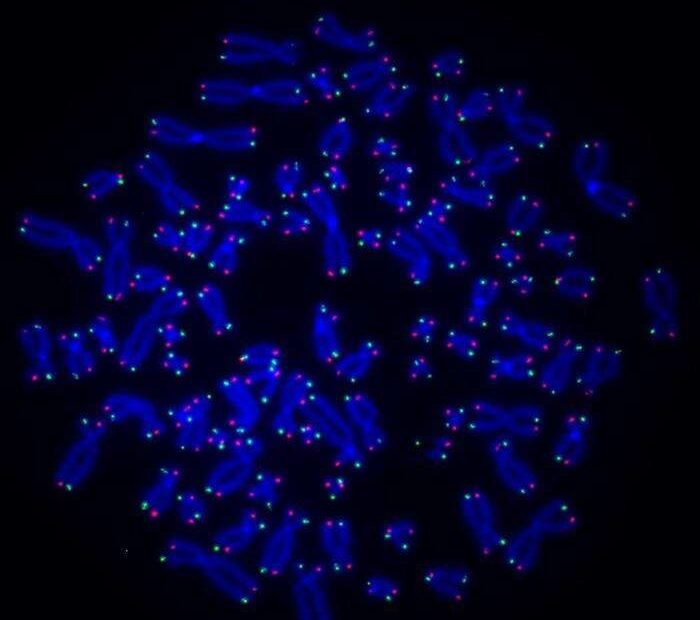
A new study led by University of Pittsburgh and UPMC Hillman Cancer Center researchers shows that an enzyme called PARP1 is involved in repair of telomeres, the lengths of DNA that protect the tips of chromosomes, and that impairing this process can lead to telomere shortening and genomic instability that can cause cancer.
PARP1’s job is genome surveillance: When it senses breaks or lesions in DNA, it adds a molecule called ADP-ribose to specific proteins, which act as a beacon to recruit other proteins that repair the break. The new findings, published today in Nature Structural & Molecular Biology, are the first evidence that PARP1 also acts on telomeric DNA, opening up new avenues for understanding and improving PARP1-inhibiting cancer therapies.
O’Sullivan hypothesizes that ADP-ribose affects telomere integrity by disrupting a protective structure called shelterin that safeguards telomeres, but more research is needed to confirm this.
“Targeting PARP1 has been a big success story for cancer therapy, but some patients develop resistance to PARP1 inhibitors,” said O’Sullivan. “I’m excited about this study because we’ve discovered something new about PARP1 biology, which generates a whole load of new questions that could help us develop novel approaches to target PARP1 or fine-tune therapies we already have. We’re right at the beginning of something exciting, and there’s a lot more to explore.”
https://www.nature.com/articles/s41594-024-01279-6