Zum Inhalt springen

HDZ NRW transplantiert sieben Herzen in acht Tagen

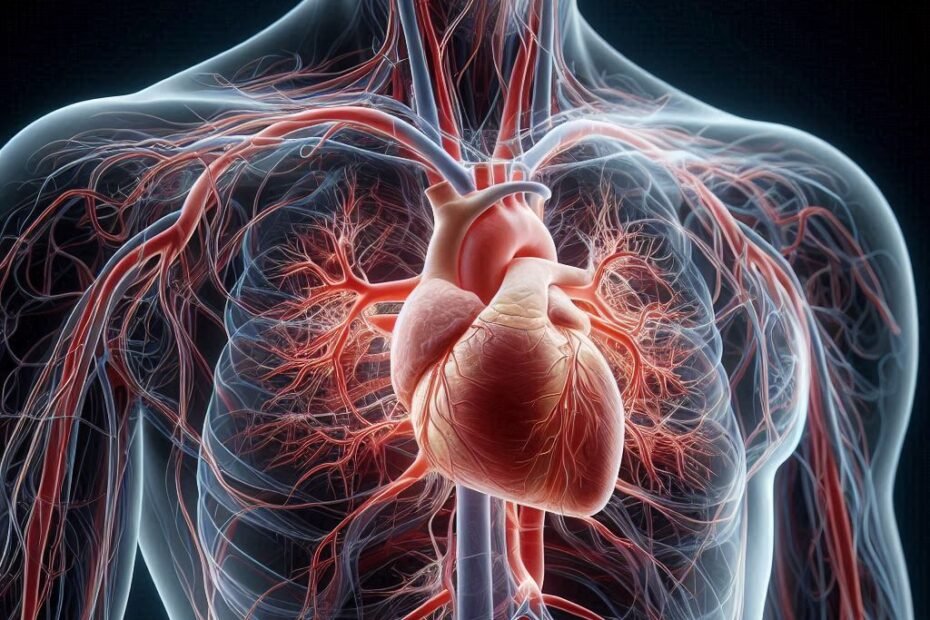
Eine solche Transplantationsserie hat das Herz- und Diabeteszentrum NRW (HDZ NRW) in Bad Oeynhausen seit Bestehen noch nicht erlebt. Chefärzte loben Zusammenhalt, Können und Einsatzbereitschaft aller Beteiligten. Die Herztransplantation gilt als Königsdisziplin der Herzchirurgie. Dabei ist es aus heutiger Sicht ein Routineeingriff, das Herz eines Patienten aus dem Brustkorb zu entfernen und ein fremdes Herz neu einzusetzen. Genau das machen die Herzspezialisten am größten Herztransplantationszentrum in Deutschland, am HDZ NRW, bereits seit 35 Jahren mit großem Erfolg. Doch innerhalb von acht Tagen tatsächlich sieben Herzen zu transplantieren, damit haben auch die erfahrensten Experten in Bad Oeynhausen nicht gerechnet. Hintergrundinformation: Auf der Warteliste für eine Herztransplantation stehen mehr als 1.000 schwer herzkranke Menschen in Deutschland (DSO, Stand 31.12.2022). 2023 haben 75 Patientinnen und Patienten im Herz- und Diabeteszentrum NRW (HDZ NRW), Bad Oeynhausen, ein Spenderherz erhalten, 2022 waren es 95 Patienten.Mit… 
Verkehrslärm führt zum Herzinfarkt

Eine internationale Lärm-Expert:innen-Gruppe unter Beteiligung des Zentrums für Kardiologie der Universitätsmedizin Mainz hat aktuelle epidemiologische Daten analysiert und starke Hinweise darauf gefunden, dass Transportlärm eng mit kardio- und zerebrovaskulären Erkrankungen zusammenhängt. Im Ergebnis fordern die Forscher:innen, dass Verkehrslärm als Risikofaktor für Herz-Kreislauf-Erkrankungen anerkannt wird. Die Ergebnisse ihrer Analysen wurden heute im renommierten Journal der American Heart Association, Circulation Research, veröffentlicht – pünktlich zum gestrigen „Tag gegen den Lärm“. Originalpublikation:T. Münzel, M. Molitor, M. Kuntic, O. Hahad, M. Röösli, N. Engelmann, M. Basner, A. Daiber, M. Sørensen, Transportation Noise Pollution and Cardiovascular Health, Circulation Research, 2024;134:1113-1135https://doi.org/10.1161/CIRCRESAHA.123.323584

KI entschlüsselt neuen Genregulationscode in Pflanzen

Die Aufklärung der Beziehung zwischen Sequenzen von regulatorischen Elementen und ihren Zielgenen ist der Schlüssel für das Verständnis der Genregulation und ihrer Variation zwischen Pflanzenarten und Ökotypen. Ein Forschungsteam unter Führung des IPK Leibniz-Instituts und mit Beteiligung des Forschungszentrums Jülich hat jetzt „Deep-Learning“-Modelle entwickelt, die Gensequenzdaten mit der mRNA-Kopienzahl für mehrere Pflanzenarten verknüpfen und die regulatorische Wirkung von Gensequenzvariationen vorhersagen. Die Ergebnisse wurden in der Zeitschrift „Nature Communications“ veröffentlicht. Originalpublikation:Peleke et al. (2024): Deep learning the cis-regulatory code for gene expression in selected model plants. Nature Communications. DOI: 10.1038/s41467-024-47744-0

Neue Spule für 7-Tesla MRT

Die Magnetresonanztomographie (MRT) ermöglicht detaillierte Einblicke in den Körper. Vor allem die Ultrahochfeld-Bildgebung mit Magnetfeldstärken von 7 Tesla und höher macht feinste anatomische Strukturen und funktionelle Prozesse sichtbar. Doch alleine die Signalstärke von solchen High-Tech-Geräten ist nicht ausreichend, um die Verbindungen von Gehirn und Halswirbelsäule darzustellen. Prof. Dr. Harald H. Quick, Direktor des Erwin L. Hahn Instituts für MR-Bildgebung, entwickelt daher mit seinem Team eine neue Kopf/Hals-Hochfrequenz-Spule für die 7-Tesla MRT. Die Französische sowie die Deutsche Forschungsgemeinschaft fördern das Projekt NeuroBoost mit insgesamt 1,3 Mio. Euro über 36 Monate.

Forscher entwickeln Wirkstoffe im Schnellverfahren

Für die meisten menschlichen Proteine sind keine Wirkstoffe bekannt, die sie chemisch binden – eine Wissenslücke, die die Entwicklung neuer Medikamente behindert. Forschende am CeMM haben zusammen mit Pfizer eine Methode verwendet und skaliert, um die Bindungsaktivität von Hunderten kleinen Molekülen gegenüber Tausenden menschlichen Proteinen zu messen – zehntausende Ligand-Protein-Interaktionen können nun für die Entwicklung neuer Wirkstoffe erforscht werden. Mit maschinellem Lernen und KI konnte man außerdem voraussagen, wie neue Wirkstoffe mit allen Proteinen interagieren. Die Studie erschien in Science (DOI: 10.1126/science.adk5864), alle Daten und Modelle sind frei zugänglich

AI in medicine: the causality frontier

Machines can learn not only to make predictions, but also to handle causal relationships. An international research team shows how this could make therapies safer, more efficient, and more individualized. Artificial intelligence is making progress in the medical arena. When it comes to imaging techniques and the calculation of health risks, there is a plethora of AI methods in development and testing phases. Wherever it is a matter of recognizing patterns in large data volumes, it is expected that machines will bring great benefit to humanity. Following the classical model, the AI compares information against learned examples, draws conclusions, and makes extrapolations. Now an international team led by Professor Stefan Feuerriegel, Head of the Institute of Artificial Intelligence (AI) in Management at LMU, is exploring the potential of a comparatively new branch of AI for diagnostics and therapy. Can causal… 

Tool helps identify babies at high-risk for RSV

A new tool to identify infants most at risk for severe respiratory syncytial virus (RSV) illness could aid pediatricians in prioritizing children under 1 to receive a preventive medication before RSV season (October-April), according to Vanderbilt University Medical Center (VUMC) research published in Open Forum Infectious Diseases and to be presented at the American Thoracic Society 2024 International Conference.  Study authors considered factors including birth month, birth weight and whether an infant has siblings to determine who is most at risk of severe RSV illness and could benefit from the medication nirsevimab, commonly used as a preventive in newborns. “We developed a tool to identify babies at highest risk for a severe infection due to RSV,” said the study’s presenter Ferdinand Cacho, MD, pediatric pulmonology fellow in the Center for Asthma Research at VUMC. “RSV is a common respiratory infection that can cause fever, cough, runny… 

Antibiotic use in patients hospitalised with COVID-19 has no beneficial effect

Analysis of over 1,300 German adults hospitalised with moderate COVID-19 finds treatment with antibiotics was associated with five times greater likelihood of COVID-19 deterioration compared to patients not given antibiotics. To explore this further, Dr Friedrichs and colleagues analysed data on 1,317 hospitalised adults (median age 59 years; 38% women) with confirmed SARS-CoV-2 infection between March 2020 and May 2023 from the German National Pandemic Cohort Network (NAPKON), which includes patients from various hospitals across Germany who were hospitalised with a positive SARS-CoV-2 PCR test. Using the WHO Clinical Progression Scale [1], they identified 1,149 patients who were classified as having moderate disease (WHO score 4-5), of whom 467 (41%) were treated with antibiotics commonly used for respiratory infections such as ß-Lactam-antibiotics, macrolides, or moxifloxacin during their hospital stay. A further 168 patients were classed as having severe disease (WHO… 

Many immigrants in Canada get Multiple Sclerosis (MS)

Immigrants to Canada who have spent a greater proportion of their lives in Canada have a greater risk of developing multiple sclerosis (MS) than people who have spent a smaller proportion of their lives there, according to a study published in the April 24, 2024, online issue of Neurology®, the medical journal of the American Academy of Neurology. The study does not prove that an increased proportion of life in Canada causes MS; it only shows an association. “Other studies have shown that immigrants tend to have better health than long-term residents, which is thought to be because healthy people are more likely to choose to immigrate,” said study author Manav V. Vyas, MBBS, MSc, PhD, of St. Michael’s Hospital in Toronto, Canada and a member of the American Academy of Neurology. “We wanted to see if the lower risk of MS declines… 

AI improves diagnosis of Mendelian disorders

Diagnosing rare Mendelian disorders is a labor-intensive task, even for experienced geneticists. Investigators at Baylor College of Medicine are trying to make the process more efficient using artificial intelligence. The team developed a machine learning system called AI-MARRVEL (AIM) to help prioritize potentially causative variants for Mendelian disorders. The study is published today in NEJM AI.  Researchers from the Baylor Genetics clinical diagnostic laboratory noted that AIM’s module can contribute to predictions independent of clinical knowledge of the gene of interest, helping to advance the discovery of novel disease mechanisms. “The diagnostic rate for rare genetic disorders is only about 30%, and on average, it is six years from the time of symptom onset to diagnosis. There is an urgent need for new approaches to enhance the speed and accuracy of diagnosis,” said co-corresponding author Dr. Pengfei Liu, associate professor of molecular…