
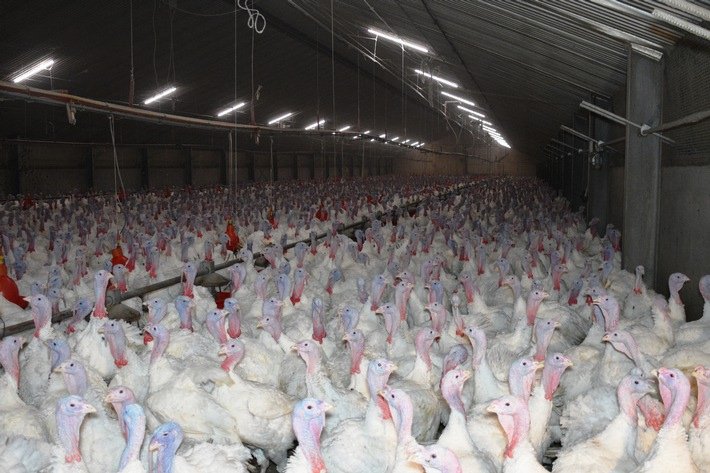
Avian Flu Threatens US Agriculture
The recent outbreak of avian flu (H5N1) in dairy cows across the United States has raised significant concerns about the potential impact on the entire agriculture sector. This analysis delves into the reasons why avian flu poses a substantial threat to US agriculture, highlighting the risks, implications, and the measures being taken to mitigate them.
Rapid Spread and Adaptation
The avian flu virus has been detected in over 30 dairy farms across ten states, with more than 130 documented infections reported by the Centers for Disease Control and Prevention (CDC)[5]. The rapid spread of the virus is attributed to the movement of infected cattle between farms, as well as the contamination of milk and dairy equipment[7]. This widespread presence of the virus increases the likelihood of further transmission to other animals and potentially to humans.
Cattle as Mixing Vessels
The infection of dairy cows has raised concerns about the potential for the virus to adapt to mammals, increasing the risk of human-to-human transmission. Cattle, with their large population and close contact with humans, could serve as a „mixing vessel“ for different influenza A strains, potentially giving rise to a new, more dangerous pathogen for humans[5].
Impact on Dairy Industry
The avian flu outbreak has significant implications for the dairy industry. Infected cows can transmit the virus through their milk, which, if not pasteurized, can spread the disease to humans[7]. This has led to concerns about the safety of raw milk and dairy products. Furthermore, the infection of dairy cows can result in reduced milk production, affecting the overall dairy supply chain[4].
Risk to Human Health
While the current risk to human health is considered low, the potential for the virus to adapt to humans and spread through human-to-human transmission is a significant concern. The CDC has reported four cases of human infection, all of which were linked to contact with infected dairy cows[1][8]. The World Health Organization (WHO) has emphasized the need for vigilance in monitoring for potential infections in both animals and humans[3].
Economic and Social Implications
The avian flu outbreak has significant economic and social implications for the agriculture sector. The infection of cattle can lead to reduced productivity, increased mortality, and the need for costly control measures. Additionally, the potential for human infection and the subsequent need for public health measures can have far-reaching economic and social impacts[5].
Mitigation Efforts
To address the threat posed by avian flu, various measures are being taken. The US Department of Agriculture has mandated testing for avian influenza in dairy cows, and the CDC is conducting genetic analyses to identify potential virus variants[1][7]. Biotech companies like Moderna are receiving financial aid to develop vaccines against the H5N1 avian flu virus[6]. Furthermore, protective measures such as monitoring dairy cow herds, emphasizing adherence to existing protective measures in sheds, and reporting any anomalies are being implemented[2].
Conclusion
The avian flu outbreak in dairy cows in the United States poses a significant threat to the entire agriculture sector. The rapid spread of the virus, its potential to adapt to mammals, and the risks to human health all contribute to the gravity of the situation. It is essential that the agriculture sector, government agencies, and public health officials work together to implement effective control measures and mitigate the risks associated with avian flu.
[1] H5N1-Virus: USA melden weitere Übertragung von Vogelgrippe von … https://www.zeit.de/wissen/umwelt/2024-07/vogelgrippe-usa-weiterer-fall-milchkuehe
[2] Wie groß ist die Gefahr einer Vogelgrippe-Pandemie? https://www.tagesschau.de/wissen/vogelgrippe-202.html
[3] Vogelgrippe bei Kühen in den USA – Gefahr für Menschen? https://www.zdf.de/nachrichten/wissen/vogelgrippe-usa-kuh-100.html
[4] Vogelgrippe bei Kühen in den USA – Luxemburgs Milchbauern sind … https://www.wort.lu/panorama/vogelgrippe-bei-kuehen-in-den-usa-%E2%80%93-luxemburgs-milchbauern-sind-besorgt/15323103.html
[5] Vogelgrippe bei Menschen – was heißt das? – ZDFheute https://www.zdf.de/nachrichten/panorama/kriminalitaet/vogelgrippe-rinder-usa-gefahr-menschen-100.html
[6] USA: USA fördern Entwicklung von Moderna-Impfstoff gegen Vogelgrippe https://www.zeit.de/wissen/2024-07/usa-vogelgrippe-moderna-impfstoff-entwicklung
[7] Vogelgrippe: Rinder fördern Ausbreitung – agrarheute.com https://www.agrarheute.com/tier/rind/vogelgrippe-rinder-foerdern-ausbreitung-619495
[8] Vierter Vogelgrippe-Fall in den USA nach Kontakt mit Kühen – GEO https://www.geo.de/wissen/virus-auf-milchviehbetrieben–vierter-vogelgrippe-fall-in-den-usa-nach-kontakt-mit-kuehen-34852372.html