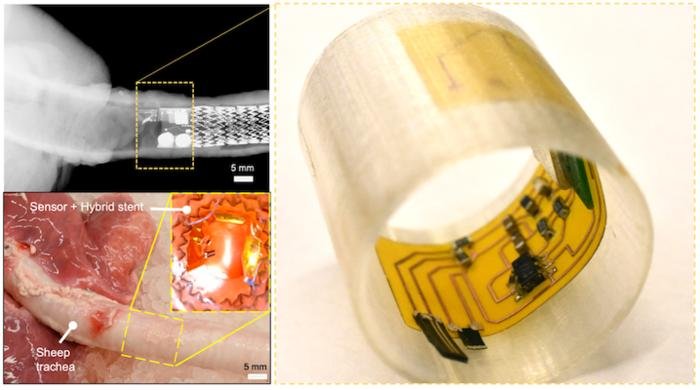
Xiaoguang Dong, assistant professor of mechanical engineering, is leading a team of researchers that has developed a system of artificial cilia capable of monitoring mucus conditions in human airways to better detect infection, airway obstruction, or the severity of diseases like Cystic Fibrosis (CF), Chronic Obstructive Pulmonary Diseases (COPD) and lung cancer.
The research was published in the November 4 issue of PNAS in the article, “Sensory Artificial Cilia for In Situ Monitoring of Airway Physiological Properties.”
In their paper, the researchers noted that continuously monitoring human airway conditions is crucial for timely interventions, especially when airway stents are implanted to alleviate central airway obstruction in lung cancer and other diseases. In particular, mucus conditions offer important biomarkers for indicating inflammation and stent patency but remain challenging to monitor. Current methods—reliant on computational tomography imaging and bronchoscope inspection—pose risks due to radiation and lack the ability to provide continuous real-time feedback outside of hospitals.
Mimicking the sensing ability of biological cilia, Dong and his team developed novel technology for detecting mucus conditions, including viscosity and layer thickness, which are crucial biomarkers for disease severity.
https://www.pnas.org/doi/10.1073/pnas.2412086121

Credits:
Vanderbilt University