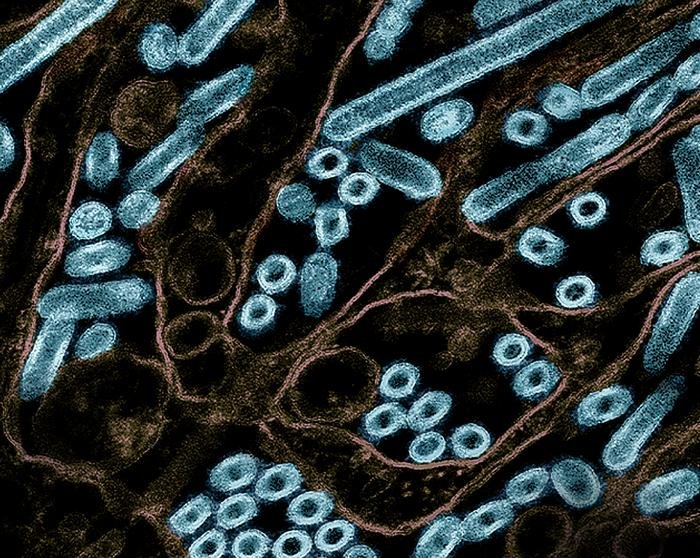
A highly pathogenic avian influenza (HPAI) H5N1 virus, isolated from the eye of a farm worker who became infected through contact with dairy cows, was lethal in mice and ferrets infected in a high-containment laboratory environment, according to a new study in Nature. The study investigators also found that the virus isolated from the worker, who experienced mild inflammation of the cornea (conjunctivitis), could be transmitted through the air between separated ferrets and might be capable of binding to and replicating in human respiratory tract cells.
The virus isolated from the worker is called huTX37-H5N1 and has a mutation (PB2-E627K) frequently seen in avian influenza viruses that replicate in mammals, typically making virus replication more efficient. These mutations underscore the need for continued monitoring and evaluation of viruses from the current H5N1 outbreak.
The study also showed that a bovine H5N1 virus is susceptible to the antiviral drugs favipiravir and baloxavir marboxil (brand name Xofluza) of the polymerase inhibitor class, as well as the neuraminidase inhibitor zanamivir. The virus is less sensitive to oseltamivir (Tamiflu), another neuraminidase inhibitor.
The authors note that the person infected with the huTX37-H5N1 virus did not develop severe illness. In fact, human cases reported from the current outbreak have mostly experienced conjunctivitis and/or mild respiratory symptoms. The researchers speculate that eye infection with a low dose of bovine H5N1 virus might result in localized conjunctivitis without severe disease in humans. Multiple exposures to seasonal human influenza viruses, they say, might provide people with low levels of protection against currently circulating HPAI H5N1 viruses—though additional study is needed.
https://dx.doi.org/10.1038/s41586-024-08254-7